
Disc Injury Treatment in Melbourne
Non-surgical care for herniated and bulging discs in Melbourne, FL. Gentle, low-force chiropractic care to ease disc pain without drugs or surgery.
Chiropractic care for disc injury
Get to the root of your disc injury
Also known as: Herniated Disc, Bulging Disc, Slipped Disc, Disc Herniation
A herniated or bulging disc can feel like your life has been put on hold — shooting pain down your leg, numbness in your fingers, or a back so stiff you can barely get out of bed. At CARE Natural Wellness Center in Melbourne, Dr. Rachael Callaway uses gentle, low-force chiropractic care and soft-tissue techniques to help ease disc-related pain and get you moving again, without drugs or downtime.
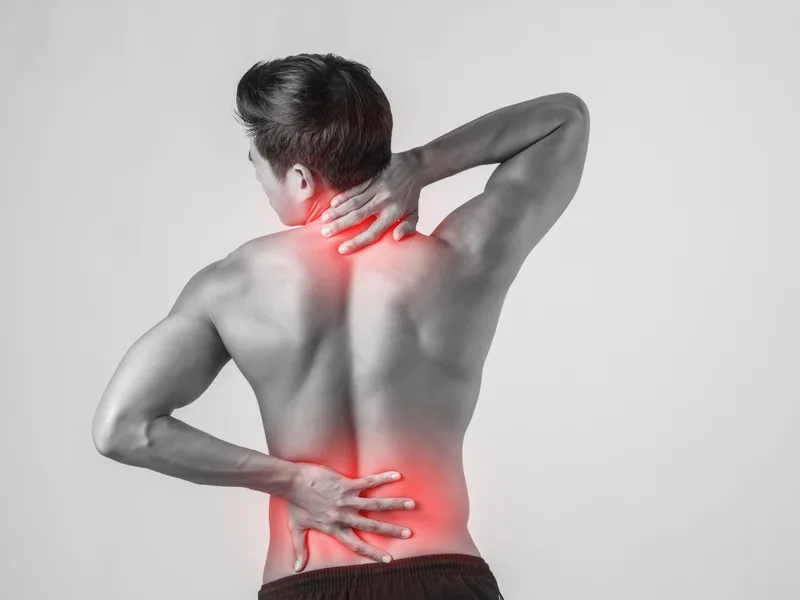
Symptoms of disc injury
- ✓Sharp or burning pain in the lower back or neck
- ✓Pain that radiates down one arm or leg (often into the hand or foot)
- ✓Numbness or tingling in an arm, hand, leg, or foot
- ✓Muscle weakness in the affected arm or leg
- ✓Pain that worsens with prolonged sitting, bending forward, or coughing
- ✓Relief when lying down or changing position
- ✓Stiffness and reduced range of motion in the spine
Common causes
- Age-related disc degeneration (discs lose water content and become less resilient)
- Heavy lifting with poor mechanics or sudden twisting
- Prolonged sitting and forward posture that loads the lumbar and cervical discs
- Repetitive occupational or athletic strain
- Trauma such as a car accident, fall, or sports impact
- Genetic predisposition to disc weakness
- Excess body weight increasing compressive load on the spine

Our approach
How we treat disc injury in Melbourne
- Step 1
Thorough exam
We review your history and perform a chiropractic examination, including basic nerve, reflex, and strength checks, to understand which area is involved — and refer you out if further testing is needed.
- Step 2
A clear, personalized plan
You get a plain-English written report of what we found, with specific recommendations for your care and whether conservative care is a good fit for you.
- Step 3
Gentle, low-force treatment
Gentle adjustments — including low-force instrument options — help restore joint motion around the injured area, while soft-tissue work and home-care guidance support recovery.
The basics
Understanding disc injury
Your spine is stacked with 23 rubbery discs that sit between the vertebrae, absorbing shock and allowing movement. Each disc has a tough outer ring (annulus fibrosus) and a soft, gel-like center (nucleus pulposus). When the outer ring weakens or cracks — from a sudden injury, repetitive strain, or years of poor posture — the inner gel can bulge outward or push through entirely. That bulge or herniation can press against a nearby nerve root, triggering pain, numbness, or weakness that radiates well beyond the spine itself.
The good news is that many disc injuries improve with conservative, non-surgical care. Inflammation can settle and nerve irritation can ease over time, especially when the extra mechanical stress on the area is reduced. We screen for the rare cases (progressive leg weakness, bowel or bladder changes) that require a surgical opinion and refer promptly, but many people with disc problems never need to go that route.

Certificate to Health
New Patient Special
Find out what's causing your pain and how we can help. An initial chiropractic evaluation for $60, which covers your consultation, exam and report of findings.
Certificate good only for first time patients who are residents of Brevard County, and does not apply to workers comp or accident cases. FEDERAL LAW PROHIBITS USE BY MEDICARE. ADDITIONAL SERVICES ARE AT ESTABLISHED PRICES. THE PATIENT AND ANY OTHER PERSON RESPONSIBLE FOR PAYMENT HAS A RIGHT TO REFUSE TO PAY, CANCEL PAYMENT, OR BE REIMBURSED FOR PAYMENT FOR ANY OTHER SERVICE, EXAMINATION, OR TREATMENT THAT IS PERFORMED AS A RESULT OF AND WITHIN 72 HOURS OF RESPONDING TO THE ADVERTISEMENT FOR THE FREE, DISCOUNTED FEE, OR REDUCED FEE SERVICE, EXAMINATION OR TREATMENT.
Types of disc injury we see
Not all disc problems are the same. Our chiropractors regularly see patients with:
- Herniated disc — the inner gel has broken through the outer ring and is pressing on a nerve root, often causing sharp radiating pain, numbness, or weakness. See our related page on pinched nerve for more on nerve compression.
- Bulging disc — the outer ring is intact but bows outward under pressure. It may irritate nearby nerves and produce symptoms similar to a full herniation, sometimes progressing to one if the load is not reduced.
- Degenerative disc disease — gradual loss of disc height and hydration over time, leading to chronic back pain, stiffness, and increased risk of herniation or nerve irritation. Gentle care aimed at mobility and comfort can help many people stay active.
If your disc injury has already produced shooting leg pain or sciatica, see our dedicated sciatica page — the nerve and disc are considered together.
When to see a chiropractor in Melbourne
Disc injuries rarely settle on their own while the underlying mechanical stress is still present. Consider scheduling an exam if you notice:
- Pain that shoots down your leg or arm, or wraps around the rib cage
- Numbness, tingling, or a “dead” feeling in a hand or foot
- Back or neck pain that lingers more than a week or keeps returning
- Symptoms that worsen with sitting, bending, sneezing, or coughing
- Pain following a car accident, fall, or heavy-lifting incident
Seek emergency care (ER, not a chiropractic office) if you develop sudden loss of bladder or bowel control, or rapidly worsening leg weakness — these are rare but serious signs that need immediate medical evaluation.
What to expect at your first visit
We spend your first appointment understanding your problem before any treatment is recommended:
- Listen to your history — when and how the pain started, what makes it better or worse, and how it’s affecting your daily life and work.
- Examine thoroughly — a chiropractic examination, including checks of sensation, reflexes, and strength, to understand which area is involved and how much the nerve is affected.
- Explain what we found — in plain English, with a written report of findings and whether conservative care is appropriate for you.
- Plan next steps together — your recommendations may include gentle adjustments, soft-tissue work, and home-care guidance, with realistic expectations.
Non-surgical disc care — without medication or surgery
Surgery and long-term pain medication are sometimes necessary — but they’re rarely the first answer for disc injuries. Conservative chiropractic care offers another path: reduce stress on the injured area, let the tissue settle, and support the muscles and movement habits that protect it.
For disc patients, we favor gentle, low-force methods. Options such as the Activator Method deliver precise, light-force adjustments without twisting the spine, which many patients find comfortable when they’re sore.
We combine adjustments with soft-tissue work (to ease protective muscle spasm) and home-care guidance (posture, movement, ergonomics). This approach addresses both the pain and the mechanics driving it.
If your exam or response to conservative care ever suggests you need imaging, a specialist referral, or a surgical opinion, we’ll tell you honestly and help point you to that next step.
Why choose CARE Natural Wellness Center
At CARE Natural Wellness Center, serving Melbourne and the rest of Brevard County, we tell you honestly what we find and what we recommend. Dr. Rachael Callaway combines precise chiropractic adjustments, low-force adjusting options, and soft-tissue techniques into one clear plan designed around your exam.
Ready to find out if conservative disc care is right for you? Our New Patient Special makes your first visit easy, and you can request an appointment online — our office will contact you to confirm.
Why choose chiropractic
Chiropractic care vs. the typical disc-injury routine
| Comparison factor | Chiropractic Care | Pain Meds & Surgery |
|---|---|---|
| Addresses the mechanics | ✓Gentle care for the joints around the disc | ✕Medication masks the pain signal |
| Drug-free & non-invasive | ✓Always | ✕Rarely |
| Risk of side effects | ✓Minimal | ✕Higher (meds, surgical complications) |
| Personalized to you | ✓Targeted care plan | ✕One-size-fits-all protocol |
| Supports long-term spinal health | ✓Posture & home-care guidance | ✕Seldom addressed |
| Recovery approach | ✓Active & gradual | ✕Surgery recovery can be lengthy |
Treatment options
Services we use to relieve disc injury
Chiropractic Care
Gentle, precise chiropractic adjustments in Melbourne, FL that restore motion to restricted joints and help ease back pain, neck pain, and headaches at the source.
Learn more →Activator Method Technique
Activator Method chiropractic in Melbourne, FL — a spring-loaded, low-force instrument adjustment that restores joint motion gently and precisely, with no cracking.
Learn more →Related conditions
Other conditions we treat in Melbourne
Patient reviews
What our Melbourne patients say
“Dr Walsh is amazing! The staff is amazing as well.”
“Dr. Brian Walsh and his caring office staff have been serving me for almost 30 years now. His chiropractic skills and Nutritional Response Testing have helped me tremendously to navigate the health obstacles that have presented themselves in my journey. From severe issues with thyroid disease to menopause symptoms to navigating the pain related to arthritis and joint issues, Dr. Walsh has been a reliable resource and a readily available care provider who has helped me maintain and improve my quality of life through access to helpful natural supplements and practical strategies for quality and healthy pain management and treatment options. His helpful and compassionate staff always go the distance to ensure that you get the care you need and they do so with cheerfulness and respect. I honestly don’t know what my quality of life would be like without access to this wonderful group of professionals.”
“Dr Walsh and staff are phenomenal”
Can a herniated disc heal without surgery?+
Often, yes. Many disc injuries improve with conservative care as inflammation settles and nerve irritation eases. We refer for a surgical opinion whenever red flags — progressive weakness, or bowel or bladder changes — are present.
What is the difference between a herniated disc and a bulging disc?+
A bulging disc protrudes outward but the outer ring is still intact. A herniated (ruptured) disc means the outer ring has cracked and the inner gel has pushed through. Both can compress nearby nerves and cause similar symptoms; both often respond to conservative care.
How can chiropractic care help a disc injury?+
Chiropractic care focuses on the joints and muscles around the injured disc — restoring motion, easing muscle guarding, and improving posture and movement habits that add stress to the area. For disc patients we favor gentle, low-force techniques such as the Activator Method when appropriate.
How do I know if my back pain is disc-related?+
Disc pain often radiates into a limb, worsens with sitting or bending, and may come with numbness or tingling. A thorough exam — and sometimes imaging — is the reliable way to know. Schedule an exam and we'll give you a clear explanation of what we find.
How many visits will I need?+
It depends on which area is involved, how long you've had symptoms, and how your body responds. After your exam, Dr. Callaway gives you a written report of findings with specific recommendations, so you know what to expect.
Do I need an MRI before coming in?+
Not necessarily. Many disc problems can be assessed clinically during the first visit. If your exam suggests imaging would change your care, we'll explain why and refer you.
Is chiropractic adjustment safe when I have a disc injury?+
When the technique is appropriate for the condition, yes. We modify our approach for disc patients — using gentler, low-force methods — and we screen for reasons not to adjust before any treatment begins.
What red flags should send me to the ER instead of a chiropractor?+
If you experience sudden loss of bladder or bowel control, rapidly progressive leg weakness, or severe pain following major trauma, go to an emergency room immediately. These signs suggest a more serious injury that needs urgent medical evaluation.
Can disc injuries come back after they heal?+
They can if the underlying mechanics — weak core, poor posture, movement habits — are not addressed. That's why we talk about posture, movement, and home care as part of your plan.
Do you see cervical (neck) disc injuries as well?+
Yes. Cervical disc injuries can cause arm pain, hand numbness, and neck stiffness, and our chiropractors use the same gentle, low-force approach we use for low back disc problems.
What does my first visit include?+
New patients start with a consultation, a chiropractic examination, and a written report of findings with recommendations. Visit our New Patients page for details on the current new-patient offer.