
Scoliosis Treatment in Melbourne
Scoliosis symptom care in Melbourne, FL. Dr. Callaway, who had scoliosis as a child, helps ease pain and support posture and mobility with chiropractic care.
Chiropractic care for scoliosis
Get to the root of your scoliosis
Also known as: Spinal Curvature, Curvature of the Spine
Scoliosis — a sideways curvature of the spine — affects people of every age, from teenagers to older adults. Chiropractic care won't straighten a curved spine, but at CARE Natural Wellness Center in Melbourne, Dr. Rachael Callaway — who had scoliosis herself as a child and has been a chiropractic patient all her life — uses a gentle approach to help manage your symptoms: easing pain, supporting posture and mobility, and caring for your overall spinal health alongside any other care you're already receiving.
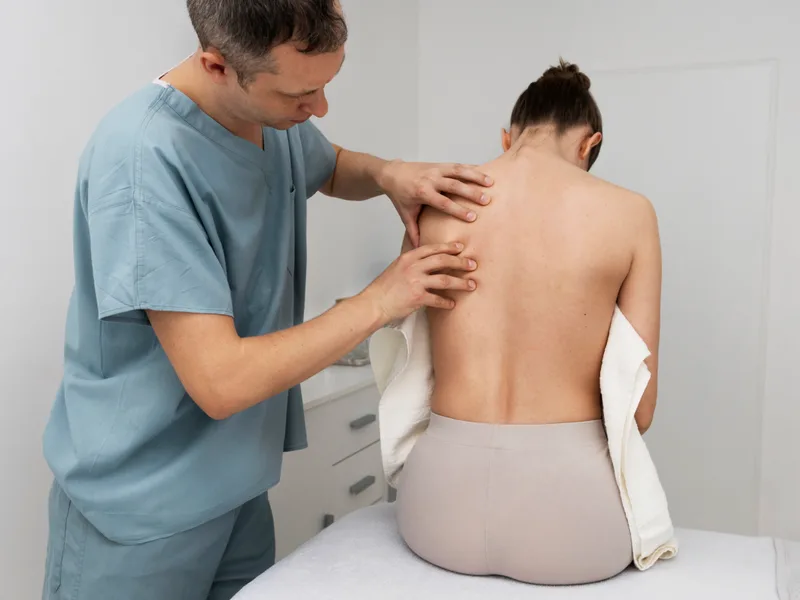
Symptoms of scoliosis
- ✓Uneven shoulders, with one noticeably higher than the other
- ✓Uneven hips or a visible tilt in the pelvis
- ✓One shoulder blade that sticks out more than the other
- ✓A visible curve or "S" shape when viewed from behind
- ✓Persistent mid- or low-back pain and muscle fatigue
- ✓Reduced range of motion and stiffness through the spine
Common causes
- Idiopathic (unknown cause) — the most common type, typically appearing during adolescent growth spurts
- Congenital scoliosis from vertebrae that formed abnormally before birth
- Degenerative scoliosis from disc wear, arthritis, and bone loss in adults
- Neuromuscular conditions such as cerebral palsy or muscular dystrophy
- Muscle imbalance or postural habits that place uneven load on the spine
- Leg-length inequality causing compensatory pelvic tilt and spinal asymmetry
- Osteoporosis-related vertebral compression in older adults
Our approach
How we treat scoliosis in Melbourne
- Step 1
Thorough evaluation
We review your history, any prior imaging, and your current symptoms, then perform a chiropractic examination of your posture and movement to understand how the curve affects you — so we can set honest, realistic goals together.
- Step 2
A personalized management plan
You receive a written report of what we found, what chiropractic can realistically help with, and recommendations that fit alongside any bracing, orthopedic, or surgical care you may need. We refer when it's in your best interest.
- Step 3
Gentle treatment & support
We use gentle adjustments to improve spinal mobility and ease pain, combined with soft-tissue work and posture guidance — helping you move better and feel better day to day.
The basics
Understanding scoliosis
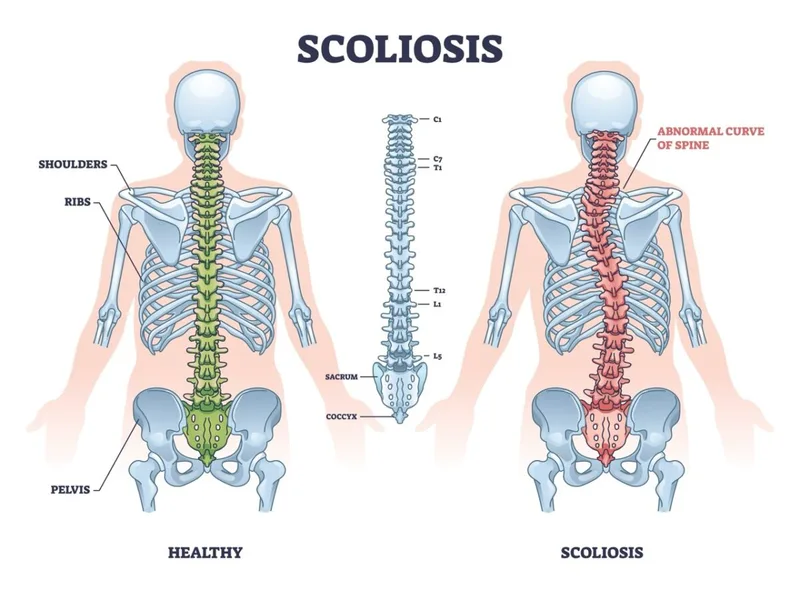
Scoliosis is defined as a lateral (sideways) curvature of the spine measuring 10 degrees or more on standing spinal imaging. In most people the cause is never found — this is called idiopathic scoliosis, and it most commonly appears during the adolescent growth spurt between ages 10 and 16. Adults can also develop degenerative scoliosis as discs wear unevenly and vertebrae begin to shift over time, often layering new pain on top of an already-complicated spine.
It is important to be clear about what chiropractic care can and cannot do for scoliosis. Chiropractic does not straighten a curved spine and does not prevent curve progression. What it can do is help manage the consequences of an abnormally curved spine: chronic muscle tension, restricted joint mobility, postural fatigue, and pain. By keeping the joints moving as well as possible and easing tension in the muscles around the curve, many patients feel more comfortable day to day. Individual results vary. Moderate and severe curves, or any curve that appears to be progressing in an adolescent, require orthopedic management — at CARE Natural Wellness Center we take that seriously and refer whenever it is in your best interest.
Certificate to Health
New Patient Special
Find out what's causing your pain and how we can help. An initial chiropractic evaluation for $60, which covers your consultation, exam and report of findings.
Certificate good only for first time patients who are residents of Brevard County, and does not apply to workers comp or accident cases. FEDERAL LAW PROHIBITS USE BY MEDICARE. ADDITIONAL SERVICES ARE AT ESTABLISHED PRICES. THE PATIENT AND ANY OTHER PERSON RESPONSIBLE FOR PAYMENT HAS A RIGHT TO REFUSE TO PAY, CANCEL PAYMENT, OR BE REIMBURSED FOR PAYMENT FOR ANY OTHER SERVICE, EXAMINATION, OR TREATMENT THAT IS PERFORMED AS A RESULT OF AND WITHIN 72 HOURS OF RESPONDING TO THE ADVERTISEMENT FOR THE FREE, DISCOUNTED FEE, OR REDUCED FEE SERVICE, EXAMINATION OR TREATMENT.
Types of scoliosis
“Scoliosis” covers several distinct patterns, and what’s driving your curve shapes what conservative care can realistically offer.
- Adolescent idiopathic scoliosis — the most common type, appearing during the growth spurt (ages 10–16) with no identifiable cause. Any chiropractic care should sit alongside orthopedic monitoring, especially if the curve is still progressing. Related: back pain.
- Degenerative (de novo) scoliosis — develops in adults as discs wear unevenly and vertebrae shift, often layering significant back pain and stiffness on top of the curvature. Gentle adjustments and soft-tissue work aim to ease pain and support function.
- Postural or functional scoliosis — a reversible curve caused by muscle imbalance, leg-length inequality, or habitual posture rather than a structural change in the vertebrae. Addressing the underlying posture and muscle patterns can help.
- Neuromuscular scoliosis — curves secondary to conditions such as cerebral palsy or muscular dystrophy. These typically require specialist-led management; chiropractic may play a supportive role when appropriate.
We’ll talk through your curve type during your evaluation and be straightforward about where conservative care fits in your overall plan.
What to expect at your first visit
Your first appointment is an evaluation, not just a treatment session — we need to understand your curve and how it affects you before making recommendations. Here’s how it goes:
- Review your history and any imaging — we go through prior imaging if you have it, how long you’ve had the diagnosis, and how symptoms have changed over time.
- Chiropractic examination — we look at how your spine is moving, where muscle tension is concentrated, and how the curve is affecting your posture day to day.
- Honest goal-setting — you’ll leave with a written report of findings and a clear picture of what chiropractic can realistically help with (pain, mobility, muscle tension) and what it cannot (structural correction, stopping progression).
- Recommendations that fit your team — care suggestions that work alongside any bracing, orthopedic, or other providers you already see.
If conservative care isn’t the right fit for your presentation, we’ll tell you — and refer you to the right provider.
Conservative, drug-free scoliosis care
Medication can quiet pain for a few hours; surgery is a major undertaking reserved for curves above roughly 40–50 degrees or rapidly progressing cases. For the many people in between — living with mild to moderate scoliosis that causes real daily discomfort — there is another path.
At CARE Natural Wellness Center, conservative scoliosis care focuses on three goals: ease pain without drugs, improve how the spine moves despite the curve, and reduce the muscle tension that builds up around it. We use gentle chiropractic adjustments to restore mobility to restricted spinal and rib joints, low-force options like the Activator Method when a lighter touch is better, and soft-tissue work or massage therapy for tight muscles. For patients whose scoliosis is wrapped up in broader back pain or neck pain, we look at those together rather than treating them as unrelated problems.
We’re honest that this approach manages symptoms rather than changing the curve — and that’s a meaningful distinction. But for patients who want to stay active and feel better in their daily lives, it can be a helpful part of the plan.
When to see a chiropractor in Melbourne
You don’t have to be in severe pain to benefit from a scoliosis consultation. Consider scheduling an evaluation if you notice:
- Persistent mid- or lower-back pain or fatigue that you’ve been told is “just from your curve”
- Uneven shoulder or hip height, or one shoulder blade that protrudes more than the other
- Increasing stiffness or loss of flexibility through the trunk
- Back pain that limits your work, sleep, or activity
- You’ve been diagnosed and want to explore conservative, drug-free symptom management
During your first visit we review any existing imaging, perform a chiropractic examination, and give you an honest picture of what chiropractic can realistically accomplish for your specific presentation. If conservative care isn’t the right fit, we’ll tell you — and point you in the right direction.
Why choose CARE Natural Wellness Center
At CARE Natural Wellness Center, serving Melbourne and the rest of Brevard County, we’re honest about what chiropractic can and can’t do for scoliosis. Dr. Rachael Callaway knows the condition from the inside: she had scoliosis as a child and has been a chiropractic patient her whole life. For scoliosis patients, her care combines gentle chiropractic adjustments to restore joint mobility and ease pain with soft-tissue techniques that release the muscle tension a curve creates.
Many scoliosis patients also carry a heavy load of low back pain — we look at both together rather than treating them as separate problems. And because scoliosis management is a long-term relationship, we keep your recommendations honest, check in regularly, and refer to other providers when that’s best for you.
Ready to find out whether chiropractic is a good fit for your scoliosis? Our New Patient Special makes your first visit easy, and you can request an appointment online — our office will contact you to confirm.
Why choose chiropractic
Chiropractic care vs. wait-and-watch
| Comparison factor | Chiropractic Care | Pain Meds & Surgery |
|---|---|---|
| Eases pain without drugs | ✓Yes — gentle adjustments and soft-tissue work | ✕Meds mask symptoms; surgery is high-risk |
| Supports posture and mobility | ✓A focus of care | ✕Rarely addressed directly |
| Eases muscle tension around the curve | ✓Soft-tissue work & massage available | ✕Seldom part of the plan |
| Tracks how you're doing | ✓Regular functional check-ins | ✕Periodic imaging only |
| Works with other providers | ✓Refers to orthopedic care as needed | ✕Often siloed |
| Appropriate for most severities | ✓Mild to moderate; refers when needed | ✕Bracing/surgery for moderate to severe |
Treatment options
Services we use to relieve scoliosis
Chiropractic Care
Gentle, precise chiropractic adjustments in Melbourne, FL that restore motion to restricted joints and help ease back pain, neck pain, and headaches at the source.
Learn more →Activator Method Technique
Activator Method chiropractic in Melbourne, FL — a spring-loaded, low-force instrument adjustment that restores joint motion gently and precisely, with no cracking.
Learn more →Massage Therapy
Therapeutic massage in Melbourne, FL relaxes tight muscles, supports circulation, and complements chiropractic care for neck pain, whiplash, and tension headaches.
Learn more →Related conditions
Other conditions we treat in Melbourne
Patient reviews
What our Melbourne patients say
“Dr Walsh is amazing! The staff is amazing as well.”
“Dr. Brian Walsh and his caring office staff have been serving me for almost 30 years now. His chiropractic skills and Nutritional Response Testing have helped me tremendously to navigate the health obstacles that have presented themselves in my journey. From severe issues with thyroid disease to menopause symptoms to navigating the pain related to arthritis and joint issues, Dr. Walsh has been a reliable resource and a readily available care provider who has helped me maintain and improve my quality of life through access to helpful natural supplements and practical strategies for quality and healthy pain management and treatment options. His helpful and compassionate staff always go the distance to ensure that you get the care you need and they do so with cheerfulness and respect. I honestly don’t know what my quality of life would be like without access to this wonderful group of professionals.”
“Dr Walsh and staff are phenomenal”
Can a chiropractor fix scoliosis?+
No — chiropractic care cannot straighten a curved spine or reverse structural scoliosis. What it can do is help manage symptoms by easing pain, improving how your spine moves, and supporting your posture and function. For moderate or severe curves, or curves that are actively progressing, we refer for orthopedic evaluation, bracing, or surgical consultation when that's the right next step.
Is scoliosis painful?+
It depends on the degree of curvature and the individual. Mild scoliosis is often painless, while moderate to severe curves can cause chronic back pain, muscle fatigue, and restricted movement — especially in adults where degenerative changes layer on top of the curvature. If scoliosis is causing you pain, that's where chiropractic care may help.
Can chiropractic stop scoliosis from getting worse?+
Chiropractic care is not proven to halt curve progression, and we won't promise that. What we can do is help keep your spine moving well, ease muscular strain around the curve, and keep an eye on how you're doing — and if we see signs of progression, we'll refer you promptly for orthopedic evaluation and imaging.
Does Dr. Callaway have personal experience with scoliosis?+
Yes. Dr. Rachael Callaway had scoliosis as a child and has been a chiropractic patient her whole life, so she understands firsthand what living with a curve feels like.
Will I need imaging before treatment?+
If you have existing imaging, please bring it — it's very helpful. If your exam suggests new imaging would change your care, we'll explain why and refer you. Ask our office if you have questions about this before your visit.
How is scoliosis diagnosed?+
Diagnosis involves a physical examination that includes an Adams forward-bend test and usually standing full-spine imaging to measure the Cobb angle. If you haven't been formally diagnosed, we can screen you during your exam and refer you for imaging as needed.
Can teenagers with scoliosis be seen?+
Call our office to talk it through. Any care for a growing teen with scoliosis should be coordinated with the orthopedic team monitoring the curve — especially when it may still be progressing.
Do you see adults with scoliosis?+
Yes. Degenerative scoliosis in adults often causes back pain and stiffness, and gentle adjustments and soft-tissue work may help ease those symptoms. Low-force options like the Activator Method are available for patients who prefer a lighter touch.
How many visits will I need?+
After your evaluation, Dr. Callaway gives you a written report of findings with specific recommendations. Scoliosis management is often an ongoing relationship rather than a short-course fix, so we'll check in on how you're responding and adjust your plan as needed.
Do you refer out for severe scoliosis?+
Yes, always. Curves above roughly 40–50 degrees, rapidly progressing curves in adolescents, or cases involving neurological symptoms require orthopedic, neurosurgical, or bracing intervention. We will refer promptly and can continue supportive care if appropriate.