
Sprains & Strains Treatment in Melbourne
Drug-free sprain and strain care in Melbourne, FL, combining chiropractic adjustments, hands-on soft-tissue work, and light therapy — not just rest.
Chiropractic care for sprains & strains
Get to the root of your sprains & strains
Also known as: Sprain, Strain, Soft-Tissue Injury
A sprain or strain can sideline you in a hurry — whether it happened at work, on the field, or just stepping wrong off a curb. At CARE Natural Wellness Center in Melbourne, Dr. Rachael Callaway assesses the injured tissue and how severe the injury is, then builds a drug-free, active-recovery plan aimed at getting you moving again more completely than rest alone.

Symptoms of sprains & strains
- ✓Pain and tenderness at or around the affected joint or muscle
- ✓Swelling and bruising in the hours following injury
- ✓Stiffness or limited range of motion at the joint
- ✓Muscle weakness or an inability to bear weight normally
- ✓A feeling of instability or "giving way" in the joint
- ✓Increased pain with activity and relief with rest in early stages
- ✓Lingering ache or recurrent injury at the same site
Common causes
- Sudden twisting, rolling, or overstretching of a joint
- Falls or direct impact during sports or physical work
- Lifting a load that exceeds your muscle strength or control
- Repetitive overuse that weakens tissue over time
- Fatigue — tired muscles lose the coordination that prevents injury
- Poor movement mechanics or muscle imbalances that overload one structure
- Returning to activity too soon after a previous sprain or strain

Our approach
How we treat sprains & strains in Melbourne
- Step 1
Injury assessment
We review how the injury happened and perform orthopedic and movement testing to identify which tissue is involved, gauge its severity, and screen for fractures or complete ruptures that need immediate referral.
- Step 2
A clear, phased plan
You get a plain-English explanation of what we found and a written report of findings with recommendations — early comfort first, then a gradual return to normal activity.
- Step 3
Hands-on care and light therapy
We combine chiropractic adjustments, soft-tissue techniques, massage therapy, and light therapy to support healing tissue, along with guidance on reintroducing movement safely.
The basics
Understanding sprains & strains
The words are often used interchangeably, but sprains and strains are different injuries. A sprain is a stretch or tear of a ligament — the tough connective tissue that holds bones together at a joint. A strain is a stretch or tear of a muscle or tendon. Both occur when a structure is pushed past its limit, and both range from mild (Grade I — microscopic tearing, intact structure) to moderate (Grade II — partial tear) to severe (Grade III — complete rupture). Many Grade I and II injuries are good candidates for conservative, drug-free care.
The traditional advice — rest, ice, compression, elevation — is a reasonable first step in the first 48 hours, but "rest" alone is where many recoveries stall. Soft tissue generally heals best with controlled, gradual movement that rebuilds the strength and coordination that protect the joint going forward. Chiropractic adjustments, hands-on soft-tissue techniques, and light therapy can support that process.
Certificate to Health
New Patient Special
Find out what's causing your pain and how we can help. An initial chiropractic evaluation for $60, which covers your consultation, exam and report of findings.
Certificate good only for first time patients who are residents of Brevard County, and does not apply to workers comp or accident cases. FEDERAL LAW PROHIBITS USE BY MEDICARE. ADDITIONAL SERVICES ARE AT ESTABLISHED PRICES. THE PATIENT AND ANY OTHER PERSON RESPONSIBLE FOR PAYMENT HAS A RIGHT TO REFUSE TO PAY, CANCEL PAYMENT, OR BE REIMBURSED FOR PAYMENT FOR ANY OTHER SERVICE, EXAMINATION, OR TREATMENT THAT IS PERFORMED AS A RESULT OF AND WITHIN 72 HOURS OF RESPONDING TO THE ADVERTISEMENT FOR THE FREE, DISCOUNTED FEE, OR REDUCED FEE SERVICE, EXAMINATION OR TREATMENT.
Types of sprains and strains we treat
Soft-tissue injuries happen throughout the body, and where you hurt often points to the cause. At CARE Natural Wellness Center we regularly help patients in Melbourne and the surrounding Space Coast with:
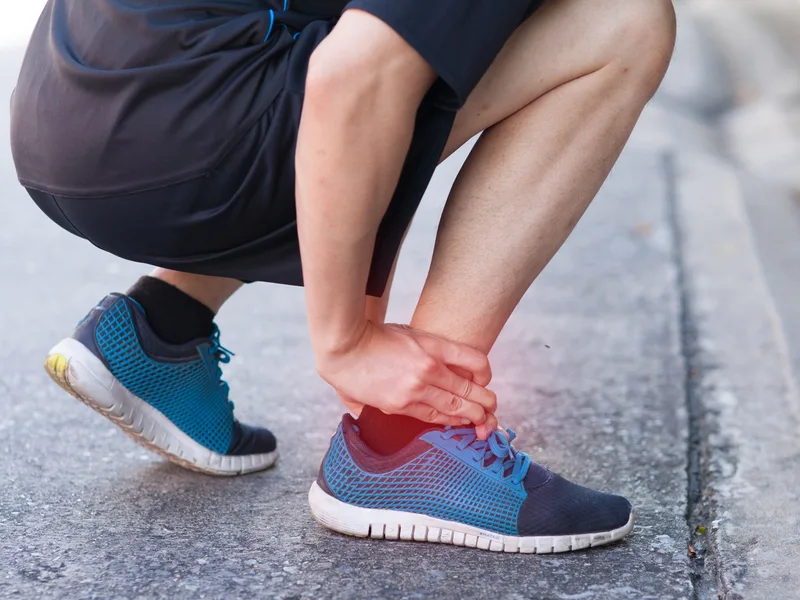
- Ankle sprains — the most common joint sprain; lateral (inversion) sprains from rolling the foot outward benefit from early care and attention to balance. See also our overuse injuries page.
- Knee sprains and strains — MCL sprains, quad and hamstring strains, and patellar tendon involvement (see knee pain) often coexist; we look at both the tissue injury and the movement mechanics that created it.
- Low back strains — paraspinal and quadratus lumborum strains are a leading cause of sudden back pain; gentle early movement usually beats prolonged rest.
- Shoulder and rotator cuff strains — see our rotator cuff page for how we approach the shoulder.
- Wrist and forearm strains — from falls, lifting, or repetitive work tasks; we check for concurrent nerve involvement (see carpal tunnel).
- Work and household sprains and strains — lifting, pushing, and awkward-posture injuries from the job, the yard, or around the house.
When to see a chiropractor in Melbourne
Most sprains and strains are not emergencies — but some deserve prompt evaluation. Request an appointment if you notice:
- Significant swelling, bruising, or difficulty bearing weight after an injury
- A “pop” at the moment of injury followed by instability
- Pain that does not start improving after 48–72 hours of home care
- A recurring sprain at the same joint that “never fully healed”
- A sprain or strain that is keeping you from your sport, job, or daily activity
Red-flag signs — severe deformity, complete loss of function, intense pain disproportionate to the mechanism, or numbness and tingling — suggest a possible fracture or complete rupture. If any of these are present, seek urgent medical evaluation; we will refer you for imaging rather than beginning conservative care.
What to expect at your first visit
Your first visit is focused entirely on understanding your injury before any treatment. We’ll:
- Review your injury history — how it happened, which movements hurt, and how it is affecting your work, sport, or daily routine.
- Assess the tissue — orthopedic stress tests and range-of-motion testing to identify which structure is involved and screen for fractures or complete ruptures.
- Explain what we found — in plain English, with a written report of findings and a realistic outlook for returning to activity.
- Begin care when you’re ready — once you understand the plan, we schedule your treatment visits.
You will know what we are recommending, why, and what to expect — no guesswork, no open-ended visits.
Drug-free sprain and strain relief — without medication or surgery
Anti-inflammatories can take the edge off early pain, but they do not rebuild ligament strength or restore joint coordination. Chiropractic care, soft-tissue techniques, massage therapy, and light therapy aim to support the healing tissue at each stage of recovery, paired with guidance on a gradual return to movement. For many people with Grade I and II injuries, that means a fuller recovery and a lower risk of re-injury — without a prescription. Individual results may vary.
Sprain and strain care at CARE Natural Wellness Center
At CARE Natural Wellness Center, serving Melbourne and the rest of Brevard County, we go further than “rest and take ibuprofen.” Dr. Rachael Callaway uses hands-on soft-tissue techniques to support your tissue through each phase of healing, and pairs that with chiropractic adjustments to restore the joint motion a sprain often disrupts. The goal is a recovery that is more complete and less likely to become a recurring problem.
Ready to get back to full strength? Our New Patient Special makes your first visit easy, and you can request an appointment online — our office will contact you to confirm a time.
Why choose chiropractic
Chiropractic care vs. the typical sprain-and-strain routine
| Comparison factor | Chiropractic Care | Pain Meds & Surgery |
|---|---|---|
| Addresses the root cause | ✓Works on tissue and joint mechanics | ✕Masks the pain only |
| Drug-free & non-invasive | ✓Always | ✕Rarely |
| Active vs. passive recovery | ✓Guided return to movement | ✕Rest-heavy, slow return to activity |
| Personalized to your injury | ✓Custom phased plan | ✕Generic protocol |
| Restores joint motion | ✓Built into the plan | ✕Seldom addressed |
| Reduces re-injury risk | ✓Core goal of the plan | ✕Not typically addressed |
Treatment options
Services we use to relieve sprains & strains
Chiropractic Care
Gentle, precise chiropractic adjustments in Melbourne, FL that restore motion to restricted joints and help ease back pain, neck pain, and headaches at the source.
Learn more →Massage Therapy
Therapeutic massage in Melbourne, FL relaxes tight muscles, supports circulation, and complements chiropractic care for neck pain, whiplash, and tension headaches.
Learn more →Light Therapy
Red and near-infrared light therapy in Melbourne, FL — a gentle, drug-free way to help ease inflammation, support circulation, and aid recovery for the whole body.
Learn more →PEMF Therapy
PEMF therapy in Melbourne, FL uses gentle, low-frequency pulsed electromagnetic fields to help support circulation, comfort and recovery. Quiet and non-invasive.
Learn more →Related conditions
Other conditions we treat in Melbourne
Patient reviews
What our Melbourne patients say
“Dr Walsh is amazing! The staff is amazing as well.”
“Dr. Brian Walsh and his caring office staff have been serving me for almost 30 years now. His chiropractic skills and Nutritional Response Testing have helped me tremendously to navigate the health obstacles that have presented themselves in my journey. From severe issues with thyroid disease to menopause symptoms to navigating the pain related to arthritis and joint issues, Dr. Walsh has been a reliable resource and a readily available care provider who has helped me maintain and improve my quality of life through access to helpful natural supplements and practical strategies for quality and healthy pain management and treatment options. His helpful and compassionate staff always go the distance to ensure that you get the care you need and they do so with cheerfulness and respect. I honestly don’t know what my quality of life would be like without access to this wonderful group of professionals.”
“Dr Walsh and staff are phenomenal”
What is the difference between a sprain and a strain?+
A sprain is a ligament injury — the connective tissue between bones — while a strain is a muscle or tendon injury. Sprains typically affect joints like the ankle or knee; strains usually affect muscle bellies or the tendons that attach them to bone. Care overlaps, but knowing which structure is involved helps us target it precisely.
Can a chiropractor help with a sprain or strain?+
Often, yes. Chiropractors are trained to assess soft-tissue injuries and support recovery with adjustments, hands-on soft-tissue techniques, and guidance on returning to activity. For Grade I and many Grade II injuries, conservative care is a sensible first step — no medication required.
Should I rest or stay active after a sprain or strain?+
Both — strategically. The first 48 hours call for protection and controlled rest to limit swelling. After that, gradual, guided movement generally works better than prolonged bed rest for rebuilding the strength and coordination that protect the joint. We help you map out when and how to reintroduce activity.
How many chiropractic visits will I need for a sprain or strain?+
It depends on the injury's severity and how your body responds. After your evaluation, Dr. Callaway gives you a written report of findings with specific recommendations — never open-ended treatment.
How do I get started?+
New patients begin with our Certificate to Health initial chiropractic evaluation — a consultation, chiropractic examination, and written report of findings with recommendations. Our New Patients page has the details, or call our office at (321) 728-1387.
When is surgery needed for a sprain or strain?+
Grade III complete ruptures — particularly of the ACL, Achilles tendon, or major shoulder ligaments — often require surgical repair. We screen for these during your exam and refer promptly if we suspect a complete tear. For partial tears and milder injuries, conservative care is typically a reasonable first step.
How soon should I be seen after a sprain or strain?+
Ideally within the first few days. Early assessment helps rule out fractures and complete tears, and guided care is easier to start before compensation patterns set in. If the injury came from a car accident, note that Florida's Personal Injury Protection (PIP) generally requires initial treatment within 14 days to use those benefits.
Do you treat ankle sprains?+
Yes. Ankle sprains are among the most common soft-tissue injuries, and lateral ankle sprains are notorious for recurring when the surrounding muscles and balance reflexes are not fully restored. We look at the injured ankle and the mechanics around it.
What is light therapy, and does it help sprains?+
Our office offers advanced light therapy using red and infrared light. It is one of the non-invasive options we may include for sprains and strains, alongside hands-on care. Whether it suits your injury depends on your exam, and individual results may vary.
What causes recurring sprains at the same site?+
A sprain that "keeps coming back" is often a recovery problem, not a bad-luck problem. If the muscles, tendons, and balance reflexes around the joint were not fully retrained after the original injury, the joint can remain unstable and re-sprain easily. That's why we look at how the joint moves, not just whether it still hurts.