
Rotator Cuff Injury Treatment in Melbourne
Conservative rotator cuff care in Melbourne, FL — chiropractic adjustments, soft-tissue work, and Shockwave Therapy for calcific tendinitis, without drugs.
Chiropractic care for rotator cuff injury
Get to the root of your rotator cuff injury
Also known as: Rotator Cuff Tear, Rotator Cuff Tendinitis, Shoulder Impingement
If reaching overhead, sleeping on your side, or throwing a ball sends a sharp pain through your shoulder, your rotator cuff may be the culprit. Whether it's tendinitis from repetitive overhead work, calcium deposits in the tendon, impingement from an irritated bursa, or a partial tear from a fall, Dr. Rachael Callaway helps patients in Melbourne and across Brevard County with a conservative, drug-free plan — and refers honestly when surgery is the right next step.
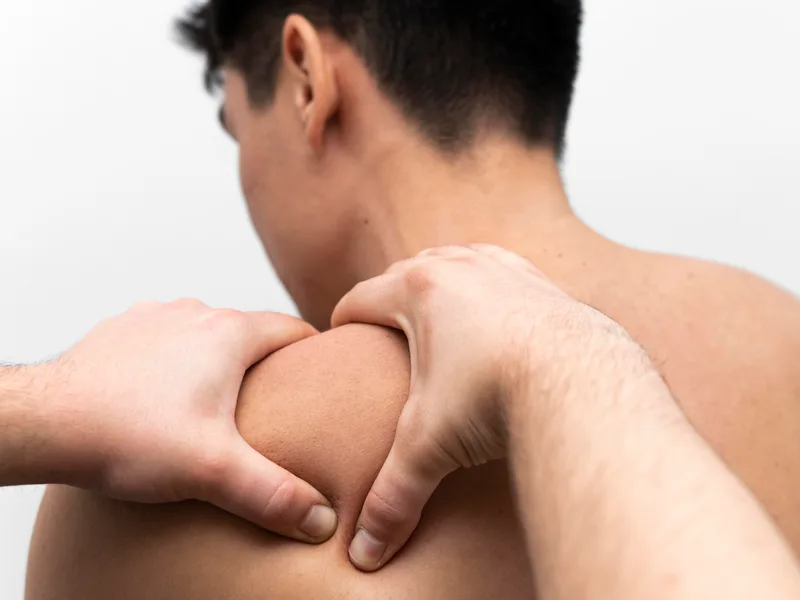
Symptoms of rotator cuff injury
- ✓A deep, dull ache in the outer shoulder or upper arm
- ✓Pain that worsens when reaching overhead or behind your back
- ✓Weakness when lifting your arm or rotating it outward
- ✓Catching, clicking, or a pinching sensation at the top of your shoulder arc
- ✓Night pain that wakes you — especially when lying on the affected side
- ✓Stiffness and limited range of motion after rest
- ✓Shoulder fatigue that limits work or sport before the arm gives out
Common causes
- Repetitive overhead work or throwing that wears the tendon over time
- Acute injury from a fall on an outstretched arm or direct shoulder impact
- Forward-shoulder posture narrowing the subacromial space
- Age-related tendon degeneration — rotator cuff tissue thins after 40
- Calcium deposits within the tendon (calcific tendinitis)
- Thoracic stiffness that limits shoulder elevation mechanics
- Poor shoulder-blade control (scapular dyskinesis) during overhead movement
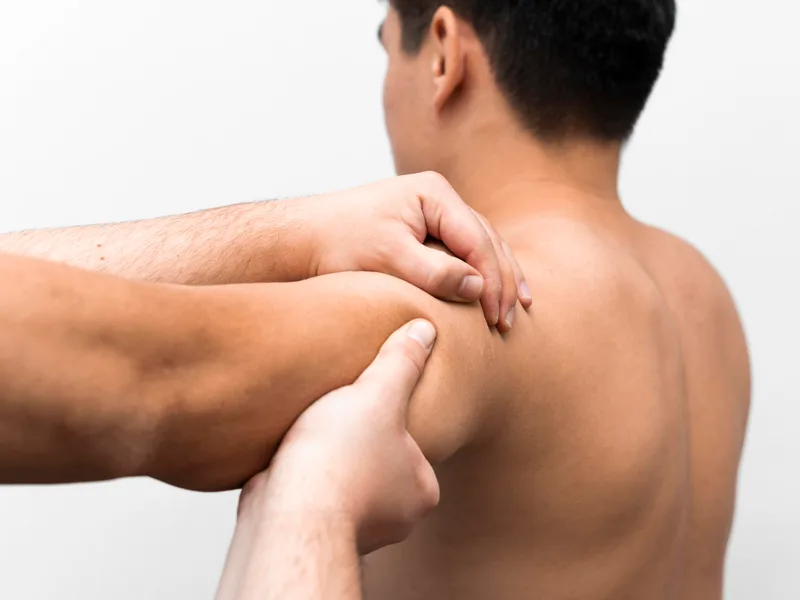
Our approach
How we treat rotator cuff injury in Melbourne
- Step 1
Thorough exam
We assess shoulder range of motion, rotator cuff strength, impingement tests, and cervical and thoracic mobility to map the real source of your pain — and refer for imaging such as MRI when it will change your care.
- Step 2
A clear, personalized plan
You learn what we found and whether conservative care is the right path, with a written report of findings, recommendations, and clear criteria for when to refer out.
- Step 3
Adjustments, soft tissue & Shockwave
We combine shoulder and thoracic adjustments, soft-tissue techniques, massage therapy, and — for calcific tendinitis and shoulder pain — Shockwave Therapy to ease pain and restore motion.
The basics
Understanding rotator cuff injury
The rotator cuff is a group of four muscles and their tendons — supraspinatus, infraspinatus, teres minor, and subscapularis — that wrap around the head of the humerus and hold it centered in the shallow socket of the shoulder blade. Every time you lift, throw, or reach overhead, those tendons glide through a narrow space beneath the acromion. When the shoulder mechanics are off — from weakness, poor posture, or repetitive strain — that space narrows further and the tendons begin to fray, inflame, or tear. Tendinitis and impingement are the earliest stages. In calcific tendinitis, calcium deposits form within the tendon and can cause stubborn pain. Full-thickness or massive tears may ultimately require surgical repair, and we will tell you clearly if that's where you land.
Many rotator cuff problems are at the tendinitis, impingement, or calcific stage — where conservative care is a reasonable first step. Restoring joint motion through shoulder, thoracic, and cervical adjustments and releasing the tight chest and back muscles that pull the shoulder forward can take stress off the cuff. For calcific rotator-cuff tendinitis, Shockwave Therapy is one of the soft-tissue techniques our chiropractors use. Timing matters — getting checked earlier usually gives you more options.
Certificate to Health
New Patient Special
Find out what's causing your pain and how we can help. An initial chiropractic evaluation for $60, which covers your consultation, exam and report of findings.
Certificate good only for first time patients who are residents of Brevard County, and does not apply to workers comp or accident cases. FEDERAL LAW PROHIBITS USE BY MEDICARE. ADDITIONAL SERVICES ARE AT ESTABLISHED PRICES. THE PATIENT AND ANY OTHER PERSON RESPONSIBLE FOR PAYMENT HAS A RIGHT TO REFUSE TO PAY, CANCEL PAYMENT, OR BE REIMBURSED FOR PAYMENT FOR ANY OTHER SERVICE, EXAMINATION, OR TREATMENT THAT IS PERFORMED AS A RESULT OF AND WITHIN 72 HOURS OF RESPONDING TO THE ADVERTISEMENT FOR THE FREE, DISCOUNTED FEE, OR REDUCED FEE SERVICE, EXAMINATION OR TREATMENT.
Types of rotator cuff conditions we treat
“Rotator cuff injury” covers a spectrum of presentations, and your care plan depends on which stage you’re in. We regularly help patients in Melbourne and the surrounding Space Coast with:
- Rotator cuff tendinitis — inflammation of one or more cuff tendons from overuse, typically the supraspinatus. Soft-tissue techniques, joint care, and load management are central. See our related shoulder pain page for the broader shoulder picture.
- Calcific rotator-cuff tendinitis — calcium deposits within a cuff tendon that cause persistent pain; one of the conditions our chiropractors treat with Shockwave Therapy.
- Shoulder impingement syndrome — the tendon and bursa become pinched beneath the acromion during elevation. Often driven by forward-shoulder posture and scapular weakness — both of which we address directly.
- Subacromial bursitis — the bursa cushioning the tendon becomes inflamed and swollen, amplifying impingement pain. See our bursitis page.
- Partial-thickness rotator cuff tear — the tendon is frayed but not fully disrupted. We evaluate carefully and refer for imaging or orthopedic input when findings warrant it.
- Rotator cuff weakness from overuse or disuse — the cuff muscles weaken after injury or prolonged rest, leaving the shoulder vulnerable to re-injury.
If you’ve been diagnosed with a full-thickness tear and are wondering whether surgery is avoidable, an honest exam will help you understand your options. And if conservative care isn’t the right path, we’ll tell you before you invest time in it. People dealing with overuse injuries from overhead work or sport often present with early-stage cuff problems worth catching before they become structural.
When to see a chiropractor in Melbourne
Don’t wait until the shoulder is completely locked up or your arm gives out on the job. Consider requesting an exam if you notice:
- Shoulder pain or weakness when lifting your arm above shoulder height
- Aching that lingers after activity or wakes you at night
- A catching or pinching sensation at the top of your shoulder arc
- Shoulder pain that followed a fall, collision, or sudden forceful pull
- Pain or tingling that travels from the shoulder into your arm or hand
- Shoulder stiffness that gets worse with rest and doesn’t loosen up with movement
- Any acute injury where you felt or heard a pop in the shoulder — seek evaluation promptly
Seek emergency care if you experience severe shoulder pain with inability to move the arm at all after a direct trauma — a significant full-thickness tear or fracture may be present.
What to expect at your first visit
Your first visit is focused on understanding your shoulder before any treatment:
- Listen to your story — when it started, what movements provoke it, whether it’s related to a specific incident, and how it’s limiting your work, sport, or sleep.
- Examine thoroughly — rotator cuff strength and length testing, impingement provocation tests, shoulder and thoracic range of motion, and cervical screening to rule in or out a neck contribution.
- Explain what we found — in plain English, with a written report of findings, a clear recommendation on whether conservative care is appropriate, and whether imaging is needed first.
- Start care when you’re ready — once you understand the plan, we schedule your treatment visits.
You’re never locked into open-ended treatment — just a specific plan, and honest referral criteria if surgery needs to enter the conversation.
Drug-free rotator cuff relief — without medication or surgery
Anti-inflammatories and cortisone shots can reduce shoulder pain temporarily, but they don’t restore the shoulder mechanics that let you use your arm comfortably. Surgery is sometimes necessary — and we will tell you when we think it is — but many cases of rotator cuff tendinitis and impingement are a good fit for conservative care first. That means releasing the tight muscles pulling the shoulder forward, restoring joint motion in the shoulder, thoracic spine, and neck, and — for calcific tendinitis — using Shockwave Therapy to stimulate the tendon’s healing response. Individual results may vary.
Rotator cuff care at CARE Natural Wellness Center
At CARE Natural Wellness Center, serving Melbourne and the rest of Brevard County, we don’t guess — we examine thoroughly, explain clearly, and build a plan matched to your stage of injury. Dr. Rachael Callaway combines chiropractic adjustment of the shoulder, thoracic spine, and neck with hands-on soft-tissue techniques including Shockwave Therapy, and massage therapy where it helps. We also know when conservative care has reached its limit and a surgical consult is the honest next step — and we’ll help coordinate that referral.
Ready to find out what’s driving your shoulder pain? Our New Patient Special makes your first visit easy, and you can request an appointment online — our office will contact you to confirm a time.
Why choose chiropractic
Chiropractic care vs. the typical rotator cuff routine
| Comparison factor | Chiropractic Care | Pain Meds & Surgery |
|---|---|---|
| Addresses the root cause | ✓Works on shoulder mechanics and soft tissue | ✕Masks pain or removes tissue |
| Drug-free & non-invasive | ✓Always | ✕Rarely |
| Risk of side effects | ✓Minimal | ✕Higher (meds, anesthesia, post-op) |
| Personalized to you | ✓Custom care plan | ✕One-size-fits-all protocol |
| Options for calcific tendinitis | ✓Shockwave Therapy available | ✕Injections or surgery |
| Honest referral when needed | ✓Yes — full-thickness tears referred out | ✕Surgery first, rehab later |
Treatment options
Services we use to relieve rotator cuff injury
Chiropractic Care
Gentle, precise chiropractic adjustments in Melbourne, FL that restore motion to restricted joints and help ease back pain, neck pain, and headaches at the source.
Learn more →Massage Therapy
Therapeutic massage in Melbourne, FL relaxes tight muscles, supports circulation, and complements chiropractic care for neck pain, whiplash, and tension headaches.
Learn more →Shockwave Therapy
Acoustic Shockwave Therapy in Melbourne, FL helps restart the body’s healing response for stubborn tendon problems like plantar fasciitis and tennis elbow.
Learn more →Related conditions
Other conditions we treat in Melbourne
Patient reviews
What our Melbourne patients say
“Dr Walsh is amazing! The staff is amazing as well.”
“Dr. Brian Walsh and his caring office staff have been serving me for almost 30 years now. His chiropractic skills and Nutritional Response Testing have helped me tremendously to navigate the health obstacles that have presented themselves in my journey. From severe issues with thyroid disease to menopause symptoms to navigating the pain related to arthritis and joint issues, Dr. Walsh has been a reliable resource and a readily available care provider who has helped me maintain and improve my quality of life through access to helpful natural supplements and practical strategies for quality and healthy pain management and treatment options. His helpful and compassionate staff always go the distance to ensure that you get the care you need and they do so with cheerfulness and respect. I honestly don’t know what my quality of life would be like without access to this wonderful group of professionals.”
“Dr Walsh and staff are phenomenal”
What causes a rotator cuff injury?+
Most rotator cuff injuries develop from cumulative overuse — repetitive overhead lifting, throwing, or reaching that gradually wears the tendon. A single traumatic event like a fall or collision can also tear the cuff acutely. Contributing factors include forward-shoulder posture, weak scapular stabilizers, a stiff thoracic spine, calcium deposits in the tendon, and the natural tendon thinning that comes with age after 40.
Can a chiropractor help a rotator cuff injury?+
Often, for tendinitis, impingement, and calcific tendinitis. Conservative care that restores shoulder mechanics and releases tight surrounding muscles is a reasonable first step for many people, and Shockwave Therapy is an option for calcific rotator-cuff tendinitis. Full-thickness tears may need surgical repair, and we'll tell you honestly if that's the case after your exam.
How do I know if I have a rotator cuff tear or just tendinitis?+
Both produce shoulder pain, but tears tend to cause more weakness and a greater loss of active range of motion. Impingement tests and strength testing during your exam give us a good clinical picture. When the findings suggest a significant tear, we refer for imaging such as MRI to confirm before recommending a care plan.
What is Shockwave Therapy for the shoulder?+
Shockwave Therapy delivers acoustic pressure waves into irritated tendon tissue to stimulate the body's own healing response. Calcific rotator-cuff tendinitis and shoulder pain are among the conditions Dr. Callaway uses it for. Whether it suits you depends on your exam, and individual results may vary.
How many visits will I need?+
It depends on the stage of the injury and how long you've had it. After your evaluation, Dr. Callaway gives you a written report of findings with specific recommendations — not open-ended treatment.
How do I get started?+
New patients begin with our Certificate to Health initial chiropractic evaluation — a consultation, chiropractic examination, and written report of findings with recommendations. Our New Patients page has the details, or call our office at (321) 728-1387.
Is chiropractic treatment for the rotator cuff safe?+
Yes. We screen for contraindications during your exam. Adjustments to the shoulder, thoracic spine, and neck are gentle, and instrument options such as the Activator Method are available when a lighter touch is a better fit.
What if I need surgery — do you still refer out?+
Yes. Full-thickness or massive tears, or partial tears that fail to improve with a proper conservative trial, should be evaluated by an orthopedic surgeon. We help coordinate that referral and share your findings so the surgeon has the full picture.
Can I still exercise with a rotator cuff injury?+
Lower-body and core work that keeps the shoulder unloaded is usually fine. We give you specific guidance on what to modify or avoid while the shoulder recovers.
Does rotator cuff injury cause neck pain too?+
It can work both directions. A stiff or restricted lower cervical spine can alter how the shoulder blade moves and increase cuff loading. Conversely, chronic shoulder guarding often tightens the upper traps and contributes to neck pain. We assess and address both in the same plan when that overlap is present.